
Brass Prabhavali and Singhasan: Beautify Your Puja Setup
A Prabhavali is an ornamental brass arch placed behind a deity idol, while a Singhasan is the brass or wooden throne the idol sits on. Together, they frame and elevate an idol the way a temple sanctum does — adding a halo-like arch of light and a raised, dignified seat. Pairing a brass Prabhavali with a matching Singhasan is the single fastest way to turn a plain idol into the centerpiece of a home puja setup.
If you’ve ever visited a South Indian or Bengal temple and noticed how the main deity seems to glow from within an ornate arch while seated on an elevated platform, you’ve seen a Prabhavali and Singhasan at work. This guide explains what each piece is, why brass is the material of choice, how to size and place them correctly, and how to care for them — so your home temple gets that same temple-sanctum feeling.
What Is a Brass Prabhavali?
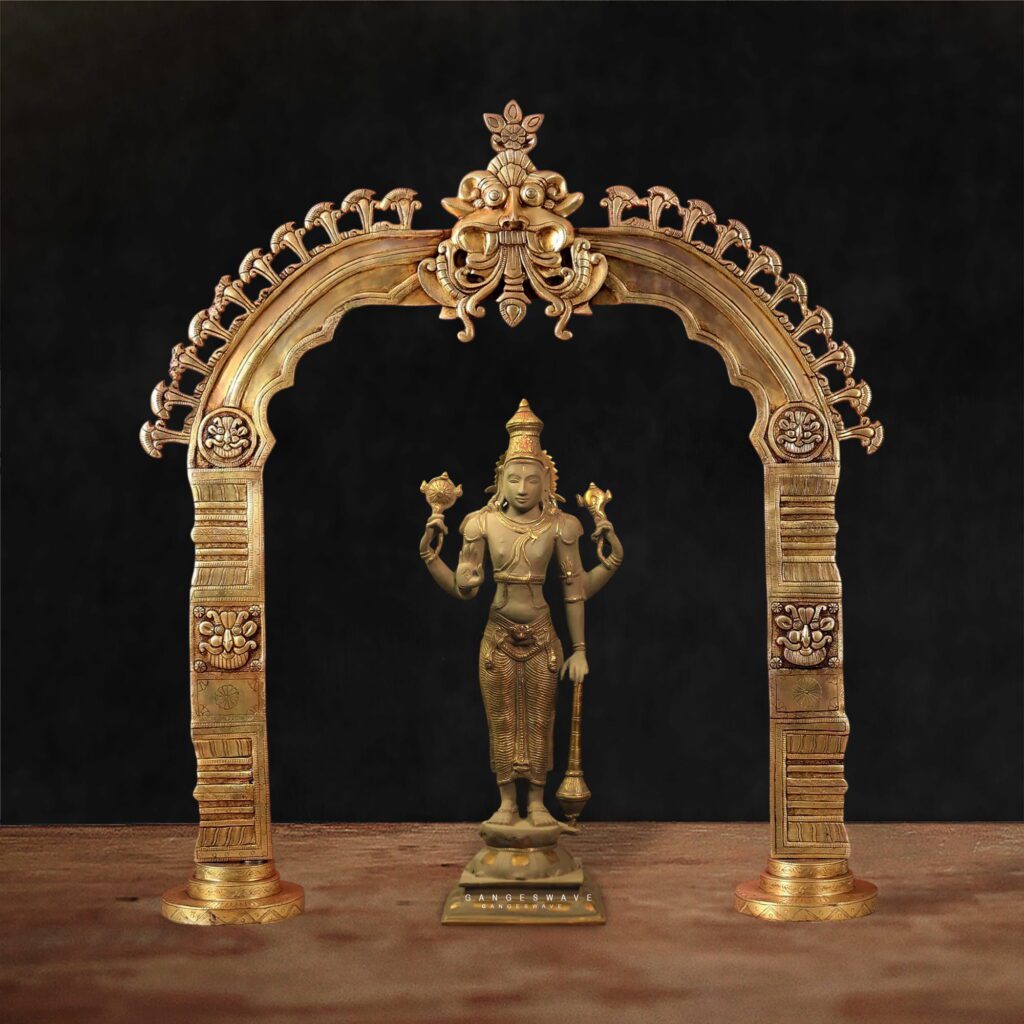
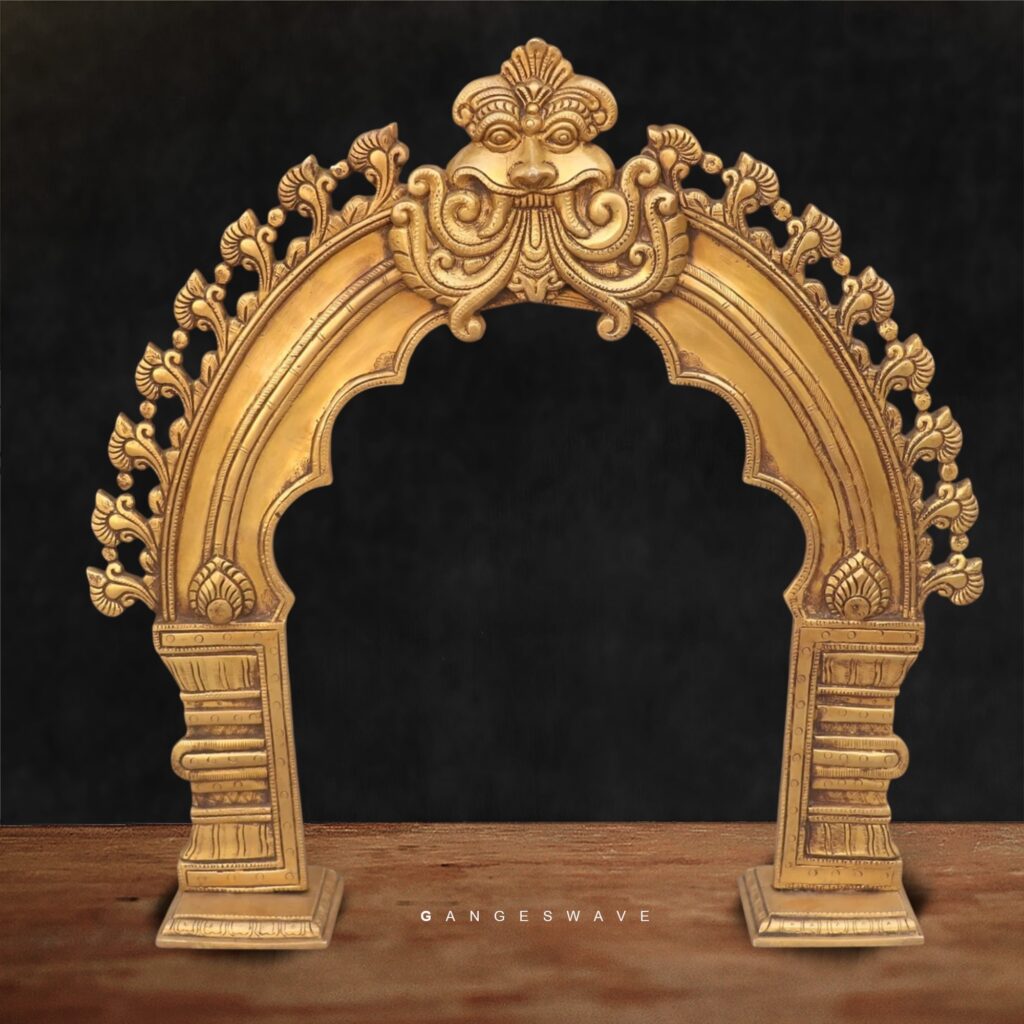
A Prabhavali (also spelled Prabhavalli, or called a Thiruvachi in South Indian temple tradition) is an arch-shaped backdrop that sits directly behind a deity idol. The word roughly translates to “circle of light” or “halo,” and that’s exactly its function — it visually radiates outward from the idol, drawing the eye inward and giving the figure a sense of divine glow.
A traditional brass Prabhavali typically includes:
- A curved or pointed arch frame, often carved with floral or mythological motifs
- A Kirtimukha (literally “face of glory”) at the crown — a guardian face believed to ward off negativity and protect the sacred space
- An antique or vintage butter-brass finish that deepens with age
Prabhavali arches range from compact 8–10 inch pieces designed for small idols to large 30+ inch temple-style arches used as wall pieces or backdrops for bigger Singhasans.
What Is a Singhasan?
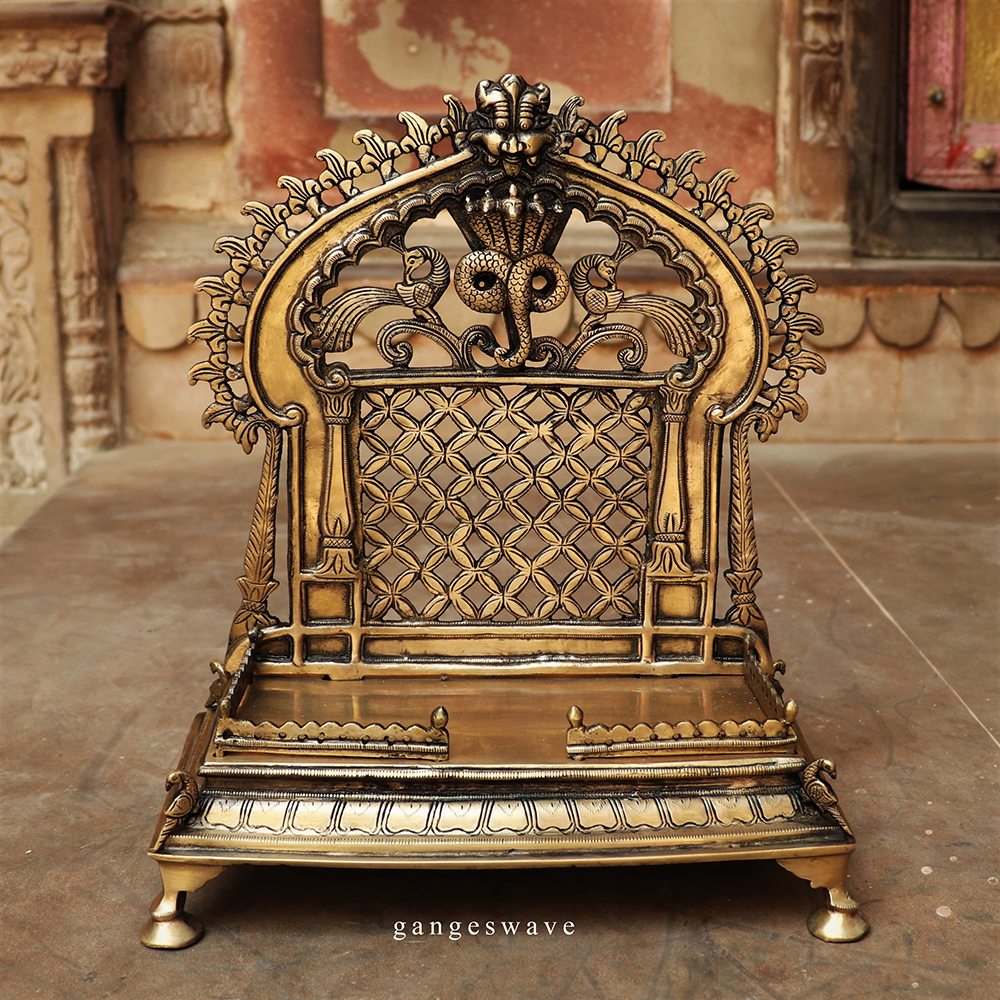
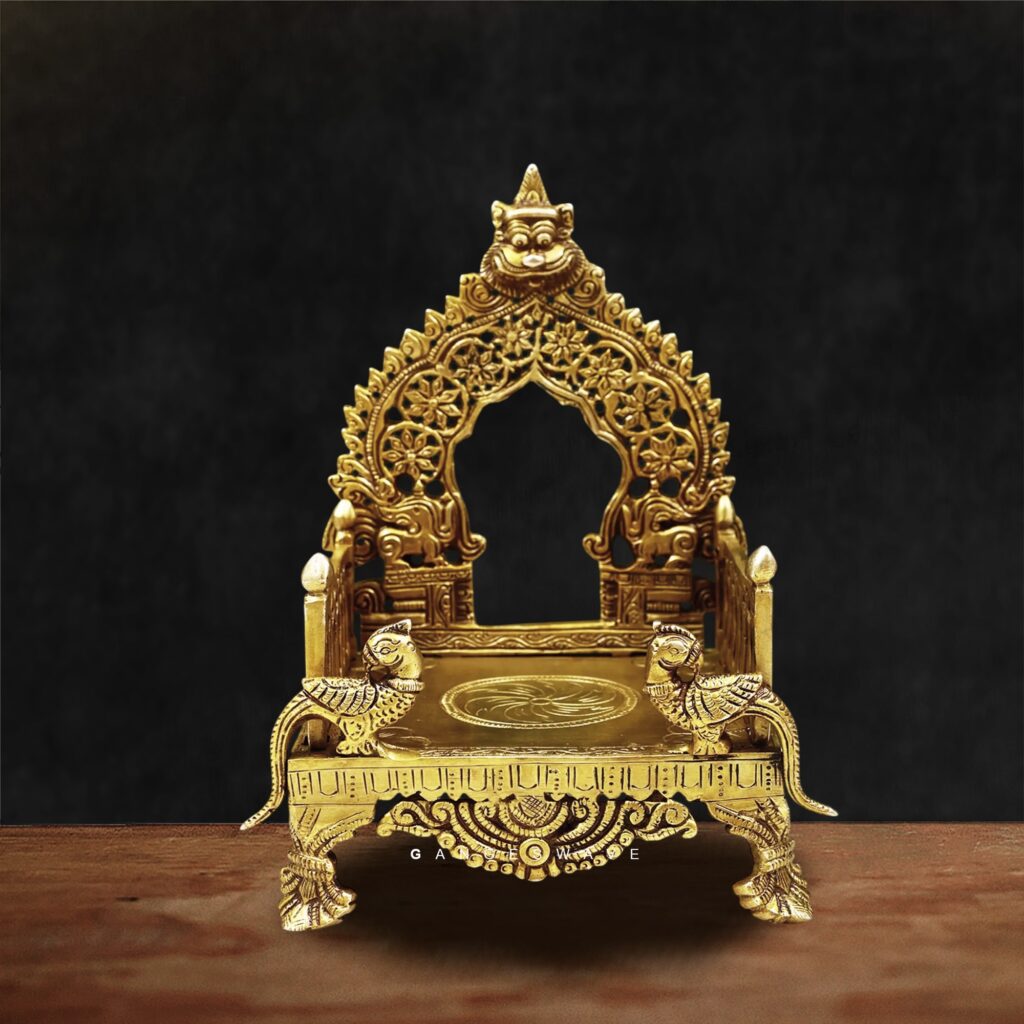
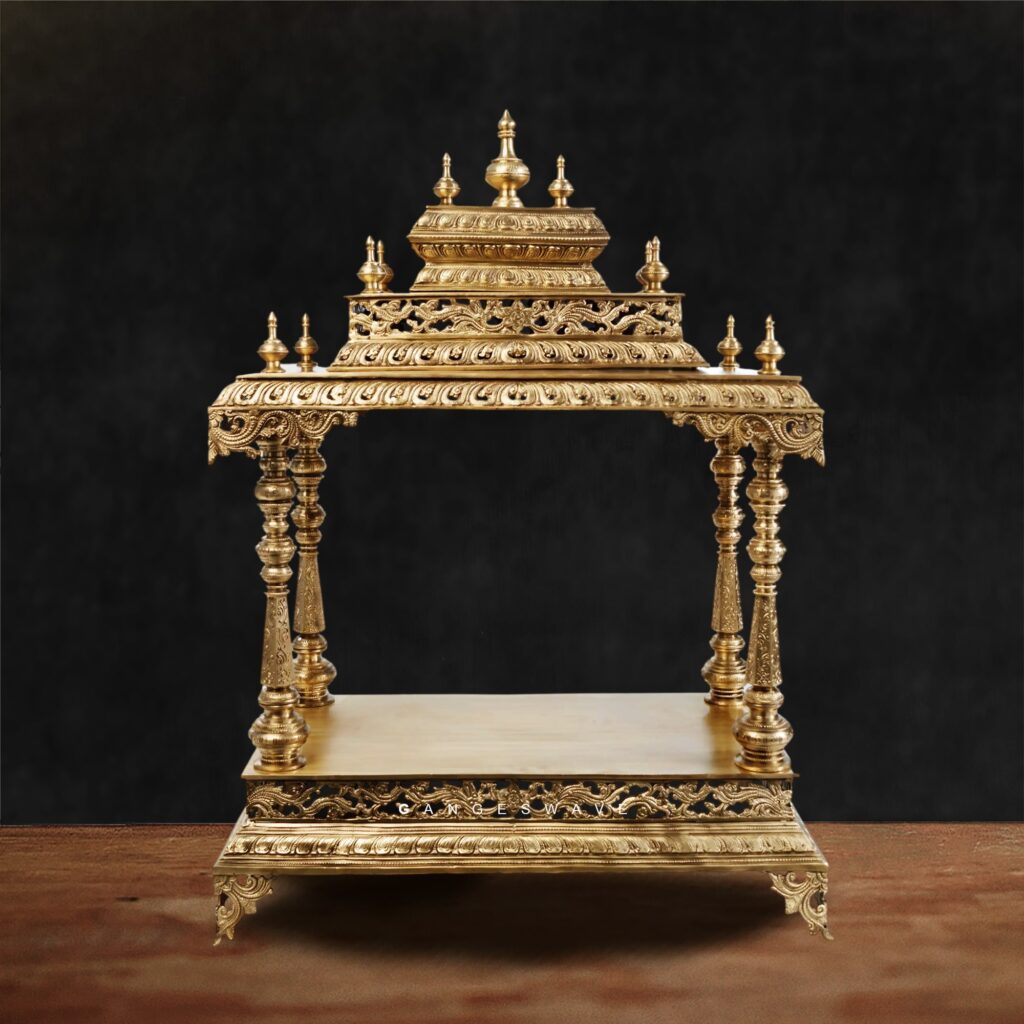
A Singhasan (literally “lion seat,” from simha meaning lion) is the raised, ornamented throne on which a deity idol is placed. In temple architecture, no deity idol sits directly on the floor or a flat shelf — it is always elevated on a Singhasan as a mark of respect and reverence.
A brass Singhasan usually features:
- A tiered or pedestal base that lifts the idol above the surrounding surface
- Decorative legs or side panels, sometimes shaped like lions, lotuses, or peacocks
- A finish that matches or complements the accompanying Prabhavali
Why Prabhavali and Singhasan Belong Together
Think of it this way: the Singhasan raises the idol, and the Prabhavali frames it. Used separately, each piece adds elegance. Used together, they recreate the visual grammar of an actual temple sanctum — an elevated, honored seat backed by a radiant arch. This is why most home temple designers and priests recommend pairing the two rather than choosing one or the other, especially for a primary or “main” deity in a puja room.
Why Brass Is the Preferred Material
Brass has been the material of choice for Indian temple decor for centuries, and it isn’t just tradition — there are practical reasons too:
- Durability: Brass resists corrosion far better than most metals and can last generations with basic care.
- Symbolism: In Vedic and Ayurvedic tradition, brass is considered auspicious and is associated with the planet Mercury (Budh), believed to bring clarity and positive energy to a space.
- Acoustics and ritual use: Brass has long been used for temple bells and puja items because of its resonant properties, reinforcing its spiritual association.
- Aesthetic warmth: Unlike cold silver or stark white marble, brass’s golden-antique tone gives a puja room a warm, glowing quality — especially under diya or lamp light, which is precisely what a Prabhavali arch is designed to enhance.
- Handcrafted character: Because most brass Prabhavali and Singhasan pieces are hand-cast and hand-engraved by traditional artisans, no two pieces are perfectly identical — a detail many buyers value as a mark of authenticity.
Types of Brass Prabhavali
Not all Prabhavali arches look the same. Here are the styles you’ll commonly come across:
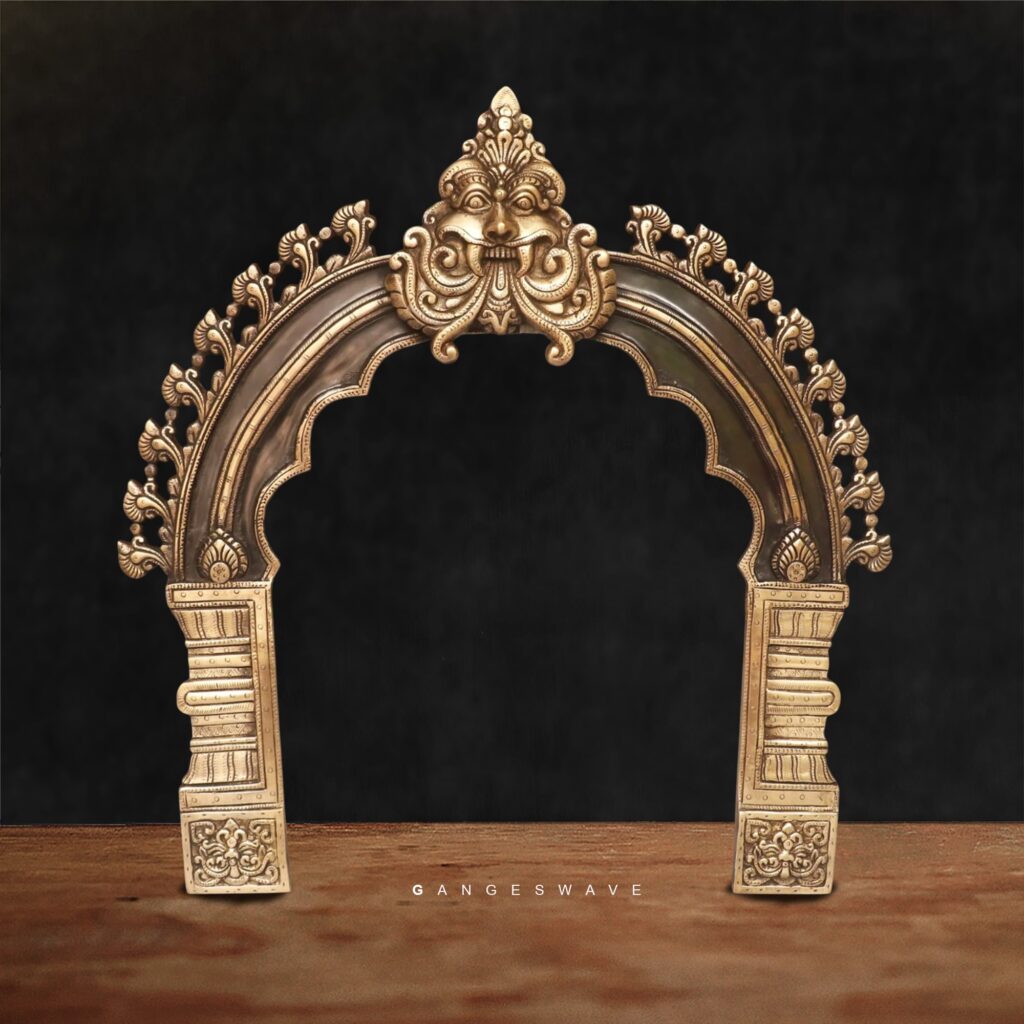
- Kirtimukha Prabhavali — Features the guardian face motif at the crown of the arch; the most widely used style for Ganesha, Shiva, and Devi idols.
- South Indian Temple-Style (Thiruvachi) Prabhavali — A tall, pointed arch with layered mythological carvings, traditionally seen behind Nataraja and Vishnu idols.
- Floral-Engraved Prabhavali — A simpler arch with vine and lotus motifs, suited to smaller idols or minimalist home temples.
- Meenakari-Detailed Prabhavali — Combines brass with colored stonework or enamel inlay for a more ornate, “royal” look — popular for Lakshmi-Ganesha idol sets and festive gifting.
- Standalone Wall Arches — Larger Prabhavali pieces (20 inches and above) that can be mounted independently on a wall as a temple-style backdrop, with the idol and Singhasan placed in front.
How to Choose the Right Size
Sizing is where most home puja setups go wrong — an arch that’s too small looks like an afterthought, while one that’s too large overwhelms the idol. Use this rule of thumb:
- Measure your idol’s height first, including its base.
- The Prabhavali’s inner height (the open space inside the arch) should be roughly 1.3–1.5 times the idol’s height, so the deity sits comfortably within the frame without touching the edges.
- The Singhasan’s width should extend slightly beyond the idol’s base — enough to look proportionate but not so much that the idol appears small.
- Match finishes. If you’re buying the two pieces separately, choose the same brass tone (e.g., antique vintage brass vs. bright golden butter brass) so they read as a single, cohesive set rather than mismatched pieces.
As a general guide: idols under 10 inches typically pair well with 12–16 inch Prabhavali arches, while idols in the 12–18 inch range usually need a 20–25 inch arch to look proportionate.
Vastu and Placement Guidelines
- Direction: The ideal placement for a home temple is the northeast (Ishaan) corner of the house, with the idol facing east or west so the person praying faces east or north.
- Elevation matters: Vastu principles emphasize that deity idols should never sit directly on the floor — this is exactly the functional role the Singhasan plays, beyond its decorative one.
- Avoid facing the bathroom, staircase, or bedroom wall directly, if the layout allows for adjustment.
- Keep the space clutter-free around the Prabhavali and Singhasan; a crowded shelf diminishes the visual “halo effect” the arch is meant to create.
- Light it well. A small diya, LED strip, or brass lamp placed near the Prabhavali enhances its reflective, radiant quality — this is arguably the single biggest styling upgrade for a home puja corner.
Caring for Brass Prabhavali and Singhasan
Brass is low-maintenance but not zero-maintenance. A few simple habits keep it looking its best for decades:
- Dust regularly with a soft, dry cloth or brush to prevent buildup in the carved details.
- Avoid harsh chemical cleaners — these can strip the antique patina finish that gives brass its character.
- For natural tarnish, a light polish with a brass-safe cleaner or a homemade paste of lemon and salt works well, applied sparingly and only when needed.
- Keep away from excess moisture — while brass resists corrosion better than most metals, prolonged damp conditions (like an unventilated puja room) can still cause dulling over time.
- Re-oil or wax occasionally if you want to preserve a darker antique finish and slow down natural tarnishing.
Styling Ideas for Different Occasions
- Diwali: Pair the Prabhavali’s natural glow with rows of diyas or fairy lights in front of the Singhasan for maximum festive impact.
- Housewarming (Griha Pravesh): A brass Ganesha or Lakshmi-Ganesh set on a Singhasan with a Prabhavali backdrop is one of the most traditional and well-received gifts for a new home.
- Wedding/Anniversary Gifting: Smaller 8–12 inch Prabhavali-and-Singhasan idol sets make elegant, meaningful gifts that double as heirloom pieces.
- Everyday Puja Room: Even without festive styling, simply positioning the idol correctly within the arch and keeping the brass polished creates a consistently elevated, temple-like feel year-round.
Frequently Asked Questions
What is the difference between a Prabhavali and a Singhasan?
A Prabhavali is the decorative arch placed behind a deity idol, while a Singhasan is the elevated throne or seat the idol rests on. One frames the idol from behind; the other lifts it from below.
Can I buy a Prabhavali and Singhasan separately, or do they need to match?
You can buy them separately, but for a cohesive look, match the brass finish (antique vintage brass, golden butter brass, etc.) and keep the arch’s inner height proportionate to the idol and Singhasan combined.
Is brass better than wood or marble for a Prabhavali and Singhasan?
Brass is generally preferred for its durability, resistance to corrosion, and traditional spiritual association with clarity and positivity, though wood and marble are also traditional and valid choices depending on personal preference and home decor style.
What does the Kirtimukha face on a Prabhavali mean?
Kirtimukha, or “face of glory,” is a guardian motif traditionally placed at the crown of a temple arch. It’s believed to protect the sacred space and ward off negative energy.
How do I clean a brass Prabhavali without damaging the antique finish?
Use a soft, dry cloth or brush for regular dusting, and avoid harsh chemical cleaners, which can strip the patina. Polish only occasionally with pure coconut oil, applying it with a pat-dry cotton.
What size Prabhavali do I need for a 12-inch idol?
For a 12-inch idol, look for a Prabhavali with an inner arch height of roughly 16–18 inches, so the idol sits comfortably within the frame without crowding the edges.
Where should I place the Singhasan and Prabhavali in my home according to Vastu?
The northeast corner of the home is considered most auspicious, with the idol ideally facing east or west so the worshipper faces east or north while praying.
Can a Prabhavali be used as a standalone wall decor piece without an idol?
Yes, larger Prabhavali arches (typically 20 inches and above) are often used as freestanding wall decor, with an idol and Singhasan placed in front rather than mounted directly inside the arch.
Ready to bring this together in your own home? Explore handcrafted brass Prabhavali arches and Singhasan sets, made by traditional Indian artisans, at GangesWave.